Category

Suggested Readings

Two Malaysians defy limits to leave a legacy of creativity and courage

Live Your Dream painting by Janet Lee

Janet Lee (1989–2023), born in Kuala Lumpur, Malaysia, was an internationally recognized colorist celebrated for her vibrant palette and free-flowing, expressive strokes. Despite living with intractable epilepsy and receiving a diagnosis of intellectual disability at age 16, Janet overcame these challenges to produce artwork that reflected joy, harmony, and a profound love for life.

She was a dedicated contributor to the Hidden Truths Project’s 1:26 The Art of Epilepsy with ongoing support from her family. We are deeply honored to see her legacy continue through the establishment of the Janet Lee Gallery in Kuala Lumpur and an upcoming documentary, which will also feature the Hidden Truths Project.

Janet is featured in The Star article, “Two Malaysians Defy Limits to Leave a Legacy of Creativity and Courage.” Click here to read.

Your Brain on Art

Your Brain on Art book cover

Your Brain on Art: How the Arts Transform Us

By Susan Magsamen & Ivy Ross
https://www.yourbrainonart.com/

Your Brain on Art opens a doorway into the powerful relationship between the arts and human well-being. Drawing on cutting-edge research, Magsamen and Ross show how creative expression and aesthetic experiences can reshape traditional medicine, strengthen community health, and support healing on both individual and societal levels.

Music, for example, does far more than offer beauty—it influences the brain, the body, and our emotional lives. It enhances attention, supports learning, reduces stress and anxiety, and connects people across backgrounds. Art, in all its forms, can be profoundly healing.


About the Authors

Susan Magsamen is the founder and director of the International Arts + Mind Lab, Center for Applied Neuroaesthetics at Johns Hopkins University School of Medicine, where she is a faculty member. She is also the co-director of the NeuroArts Blueprint. Susan works with both the public and private sectors, using evidence-based arts and culture approaches in areas including health, child development, education, workforce innovation, rehabilitation, and social equity.

Ivy Ross is the Vice President of Design for the hardware product area at Google, where she leads a team that has won more than 225 design awards. She is a National Endowment for the Arts grant recipient and was ninth on Fast Company’s list of the one hundred Most Creative People in Business in 2019. Ross believes that the intersection of arts and sciences is where the most engaging and creative ideas are found.

Service Dogs: What You Should Know (and Stop Believing)

Service Dogs: What You Should Know (and Stop Believing)

Service dogs are more than furry companions in vests – they are highly trained partners who perform essential, often life-saving tasks. From detecting medical emergencies to enhancing mobility and providing emotional support, these dogs empower individuals with disabilities to live with greater independence and confidence. Despite their growing presence in public spaces like airports, stores, and workplaces, many people still misunderstand the vital roles they play. Unfortunately, service dog handlers often encounter barriers, including public misconceptions, access challenges, and distractions caused by untrained animals or well-meaning strangers.

The journey to obtaining a service dog is rarely simple – it can be long, costly, and emotionally taxing, with training programs lasting up to two years and waitlists stretching for years. Yet for those who receive them, service dogs are life-changing. Take Arrow, for example – a seizure-alert service dog who works alongside Dr. Meghan Mills, who lives with epilepsy, relying on Arrow to help keep her safe and maintain independence. Arrow is trained to detect seizures before they occur, giving Dr. Mills time to prepare and stay safe. Their partnership is a powerful testament to the transformative role service dogs play – offering safety, stability, and renewed independence.

Watch how their partnership empowers Dr. Mills and learn how Arrow’s support goes beyond
companionship.

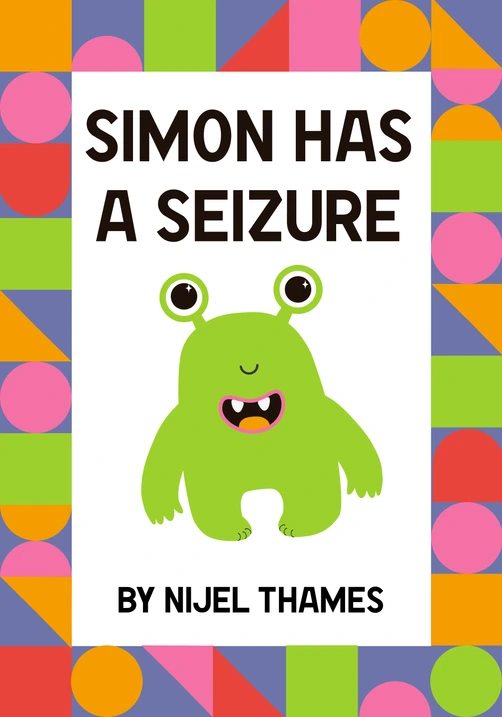
Simon Has A Seizure

Simon has a Seizure

Written by Nijel Thames

Awareness and acceptance of epilepsy are important at all ages. Simon Has A Seizure, written by an author with epilepsy tells the story of friends and family caring for Simon, who has a seizure while playing with friends. Designed as a children’s story, it provides an opportunity for parents, teachers, and others in the community to engage younger children in a discussion of seizures and seizure safety.

The lived experience of the burden of normality: Explored through the lens of art therapy

Abstract

Within the clinical and research spheres, there is increasing recognition of the importance of understanding the lived experience of ongoing illness and incorporating this voice into research and clinical practice. The current paper provides insights into the lived experience of undergoing epilepsy surgery, explored through the lens of art therapy. Six pieces of self-portraiture are presented that highlight key features of the burden of normality as experienced by joint first author Sarah Brown (SB) after her epilepsy surgery. Self-reflections from SB about her artwork are integrated with findings from the empirical literature that detail experiences of post-operative adjustment, providing novel insights into the post-operative adjustment process from the lived experience perspective. This approach highlights ways in which key findings from the research literature, which summates experiences at the group level, can be applied to the individual situation. The study also underscores the potential value of art therapy as a complementary therapy for holistic post-operative rehabilitation practices.

Epilepsy Explained from an Individuals Perceptive

Welcome!

“This is a website about understanding epilepsy.

I created it because I believe there’s a need for plain-spoken, practical information about this affliction, especially for the families and friends of people who have epilepsy.”

Jane Deal

https://www.instagram.com/janedealcateringandart/

Please note: The information provided is for educational purposes only and is not intended as medical advice.

COMMUNITY IN MOTION

COM·​MO·​TION: FROM THE LATIN, “COM”, MEANING ALL TOGETHER & “MOTIO” MEANING MOVEMENT

ComMotion – Community in Motion builds community and improves well being through adaptive and inclusive movement.  

We provide people of all walks of life the opportunity to engage in fun activities that will stimulate the mind, body and soul.  Our unique multi-sensory programs have reached, inspired, and moved more than 35,000 people from around the world.

Meditation Changes Your Brain. Here’s How.

Meditation Changes Your Brain. Here’s How.

It’s Mental Health Awareness Month. If you’re one of the 32 percent of US adults who experienced symptoms of anxiety or depression last year, your doctor or mental health care provider may have recommended you learn meditation to help manage your stress. But how exactly does this age-old practice change the brain? Neuroscientist Richard Davidson, PhD ’76, the William James and Vilas Professor of Psychology and Psychiatry at the University of Wisconsin–Madison, discusses his decades of research on meditation—enabled in part by a collaboration with the Dalai Lama—and dispels myths about how it works and when, where, and how it can be done.

Global, regional, and national burden of disorders affecting the nervous system,

Global, regional, and national burden of disorders affecting
the nervous system,

Building disability-inclusive health systems

Building disability-inclusive health systems

Disability inclusivity: time to step up

Disability inclusivity: time to step up

Neuroaesthetics: How Art Is Scientifically Proven To Help Brain Health

Neuroaesthetics: How Art is Scientifically Proven to Help Brain Health

The mind-boggling, semi-new scientific field of neuroaesthetics may turn the art world on its head––in a good way. Emerging brain research proves what artists and art lovers have sensed all along: Art can make us feel better. But that’s only the beginning. There’s more, much more, to neuroesthetics.

“Neuroaesthetics emerged in the late 1990s, and nobody is clear on who coined the term, but a simple definition is that neuroesthetics is the study of how arts measurably changes the body, brain, and behavior and how this knowledge is translated into practice,” said Susan Magsamen, founder, and director of the International Arts + Mind Lab Center for Applied Neuroaesthetics at Johns Hopkins University School of Medicine.